Private Equity Experience: Ducalian EIS Pub Portfolio
Strategic Leadership, Legal Activism, and Digital Governance
Background
I was a relatively small investor — though the second largest by aggregate holding — in a syndicate of around 255 UK high-net-worth investors arranged by Ducalian Capital.
Ducalian raised roughly £30 million, deployed across six freehold London pubs, each structured as a separate company to qualify for Enterprise Investment Scheme (EIS) tax relief.

The investment was presented as a stable, asset-backed opportunity offering diversification and tax efficiency. However, within a few years, concerns grew among investors about poor communication and opaque reporting. Information was inconsistent, trading results appeared overstated, and the management team became increasingly unresponsive.
Formation of the Activist Investor Group
When repeated requests for clarity went unanswered — and management began actively restricting investor contact — six of us formed an activist group to enforce transparency and protect the assets.
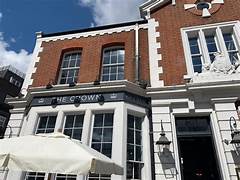
My focus was on strategy and legal coordination: analysing shareholder rights, identifying breaches of fiduciary duty, and preparing potential claims related to wrongful trading and insolvency. The group brought together lawyers, accountants, bankers, and private equity professionals. Together, we developed a structured plan combining legal action with clear investor communication.
Reconnecting 255 Disconnected Investors
The first challenge wasn’t legal — it was organisational. The investor base was scattered and unconnected, with no shared channel for communication.
To address this, I built a dedicated coordination website to act as the campaign’s central hub. It enabled investors to verify their holdings, share information securely, and participate in collective decisions.

The platform soon became an operational backbone:
- A verified investor directory and secure messaging system
- A central archive for accounts, valuations, and correspondence
- A forum for legal, financial, and operational analysis
- Voting and proxy tools to reach company quorums
Within weeks, most investors were active on the site, transforming a dispersed, frustrated group into an organised and informed collective.

Restoring Control
With a critical mass of shareholders, we called an Emergency General Meeting (EGM) under the company’s Articles. Over 95% of investors (the rest uncontactable) voted to remove the incumbent director, James McCulloch, initiate proceedings against him, and appoint a new, experienced operator.
A £5 million capital raise followed, providing the liquidity needed to refinance and stabilise operations. Each of the six companies required careful management to preserve EIS compliance and handle cross-party interests.
Subsequent forensic reviews identified and recovered over £1 million in excessive management fees. Between 2021 and 2022, the pubs were stabilised and sold individually, each sale structured according to its unique ownership composition.

The Website’s Continuing Role
After the change of control, the website evolved from a campaign tool into a long-term governance and reporting platform. It ensured that all investors received identical information, hosted management updates, and provided a forum for ongoing feedback and analysis.
Its continuing functions included:
- Providing contemporaneous access to management reports and financial updates
- Ensuring all investors received identical information simultaneously
- Hosting investor analysis and commentary on performance and strategy
- Acting as a forum for collective feedback to management and future planning

It also played a key role in coordinating a further £5 million raise in subordinated debt, which was offered pro rata to existing equity holders. Managing this process fairly — balancing the interests of investors who chose to inject additional funds with those who did not — required careful communication and transparent allocation.
The platform became the trusted point of reference for transparency, participation, and governance throughout the refinancing, recovery, and eventual sale process.
Results
Through a mix of legal pressure, digital coordination, and collective persistence, the group achieved:
- Recovery of over £1 million in misapplied fees
- Removal of the incumbent management team
- Stabilisation and refinancing of all six companies
- Successful sales under improved governance conditions
- Establishment of a lasting digital communication framework
This project demonstrated how strategic leadership, supported by well-designed digital systems, can restore accountability and protect value even in distressed and fragmented investment structures.
Lessons Learned
The experience offered a deep, practical education in governance, restructuring, and stakeholder alignment. Managing 255 investors across multiple entities required clear communication, patience, and a focus on facts over emotion.
A few enduring lessons:
- Governance and transparency are the foundation of value preservation
- Digital tools can transform fragmented investors into an effective collective
- Successful activism relies on legal clarity, accurate data, and steady leadership
- Authority among peers depends on fairness, credibility, and good judgment
Although the financial outcomes varied by asset, the process built long-term professional relationships and reinforced the importance of structure, accountability, and trust in private investments.
Reflection
What began as a distressed investment became a lesson in investor mobilisation and digital governance. Helping to design both the strategy and the systems that enabled it showed how much can be achieved when information and accountability are brought into the open.
It was, in essence, about restoring fairness and order to a situation that had lost both — and a reminder that transparency is the strongest protection any investor can have.